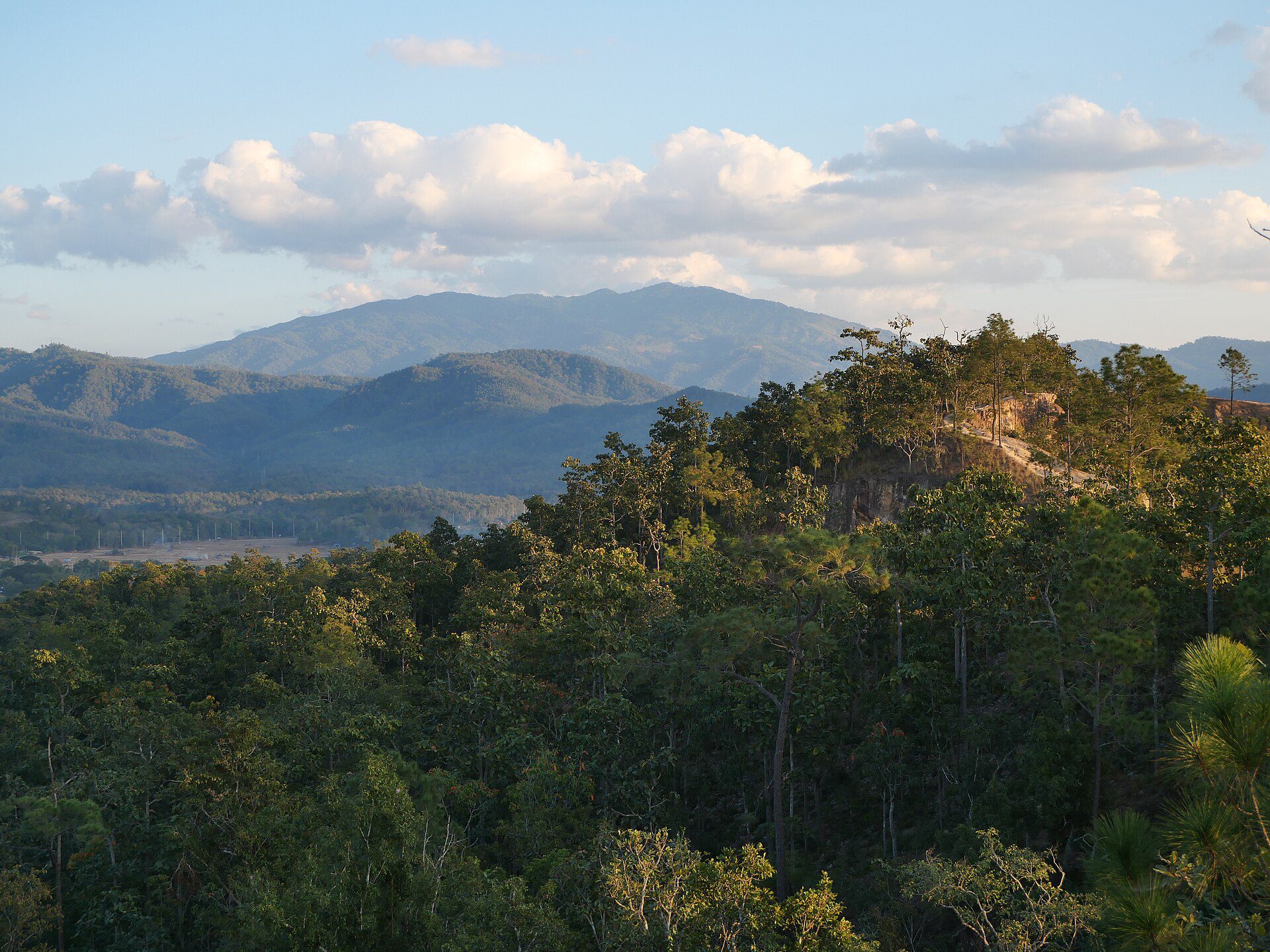
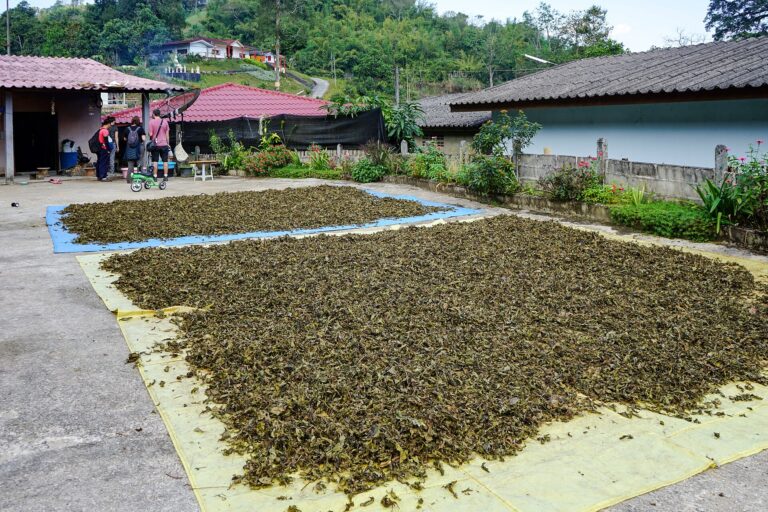
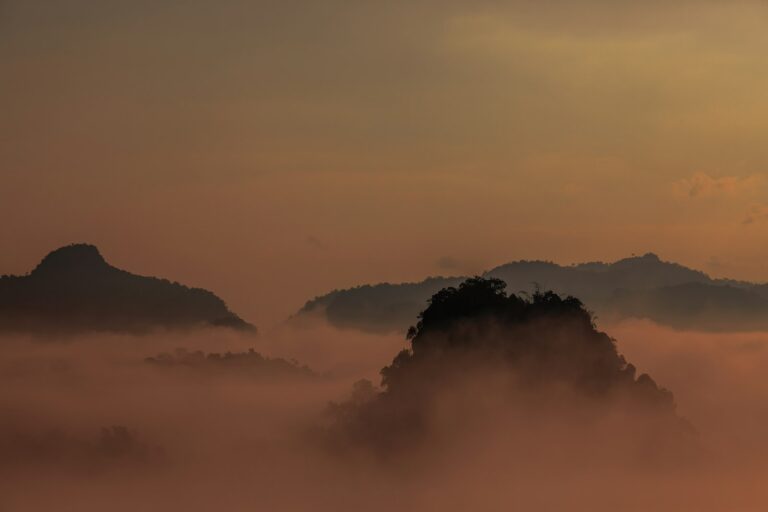
A valley so enclosed by mountains that it has its own weather, its own architecture, and its own sense of time. Shan temples reflected in a still lake, a Yunnan village hidden above the clouds, and a bamboo bridge that 500 local hands rebuild each year for no one but the monks and the morning mist.
Mae Hong Son earns its isolation honestly. The province shares its western border with Myanmar and is separated from the rest of Thailand by a wall of forested ridges that kept it almost unreachable until a tarmac road arrived in the 1960s. Even today, the flight from Chiang Mai takes 40 minutes — the same journey by land requires navigating 1,864 mountain bends. That effort is precisely the point.
The three days in this itinerary are built around two forces that define Mae Hong Son: mist and stillness. Every stop has been chosen because it rewards a slow pace.
The itinerary
Arrival · Ban Rak Thai — Yunnan Village · overnight on the hill
1Ban Rak Thai — Yunnan Village2Lee Wine Ruk Thai Resort
Photo not yet uploaded
Afternoon
Ban Rak Thai — Yunnan Village
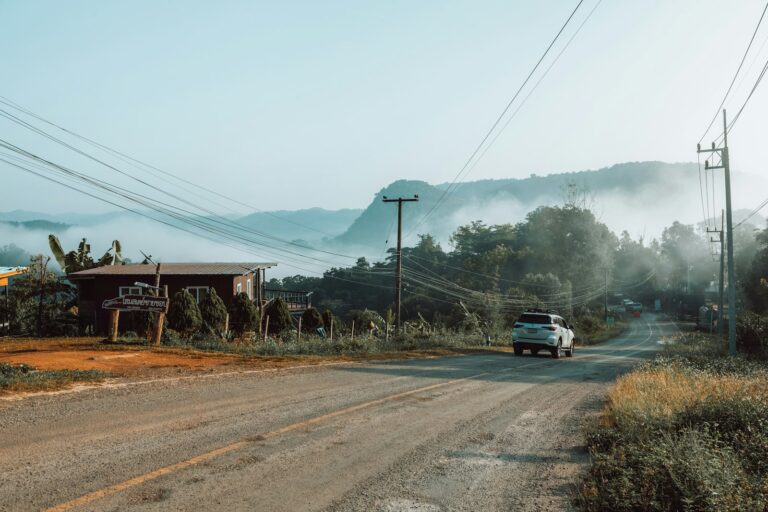
The road from Mae Hong Son town curls steadily upward for 45 minutes until a green valley opens below you and a cluster of earth-toned buildings appears at 1,800 metres. Ban Rak Thai was settled in the late 1940s by Yunnan Chinese families who crossed the border when the civil war turned against the Nationalists. The small lake at the heart of the village reflects the surrounding hills with a precision that makes photographers put their cameras down and simply look.
Insider tip: Plan ahead: arrive before 08:30 — the mist lies thickest on the lake in the first hours after dawn. In December and January temperatures can dip to 5°C at sunrise.
Photo not yet uploaded
Evening
Lee Wine Ruk Thai Resort
Sitting on the slope above the village, Lee Wine Ruk Thai is the only place to stay that puts you inside the landscape rather than adjacent to it. The rooms are styled after traditional Yunnan earth houses — thick walls, warm light, a private balcony opening onto a view of the lake and the mountains.
Breakfast
Lunch
Dinner
Hotel
Lee Wine Ruk Thai Resort, Ban Rak Thai — Yunnan-style hillside lodge, lake view, 1,800m elevation
Dawn boat on the lake · Chong Kham–Chong Klang Temples · walking street at dusk
1Antique Wooden Boat — Morning Mist on the Lake2Leewine Coffee — Yunnan-style Cafe on the Hill3Chong Kham–Chong Klang Temples — Shan Buddhist Heritage4i.b. Coffee Matcha Bar — Renovated Wooden House5Saeng Poi Cottage — Check-in
Photo not yet uploaded
Sunrise
Antique Wooden Boat — Morning Mist on the Lake
Before breakfast, a short wooden boat glides out onto the village lake while the mist is still undisturbed. The only sounds are the paddle meeting the water and a rooster somewhere in the village deciding it is time. Morning light filters through the fog in long horizontal beams.
Insider tip: Timing: the boat runs best between 06:30 and 08:00 — our team books it in advance.
Photo not yet uploaded
Morning
Leewine Coffee — Yunnan-style Cafe on the Hill
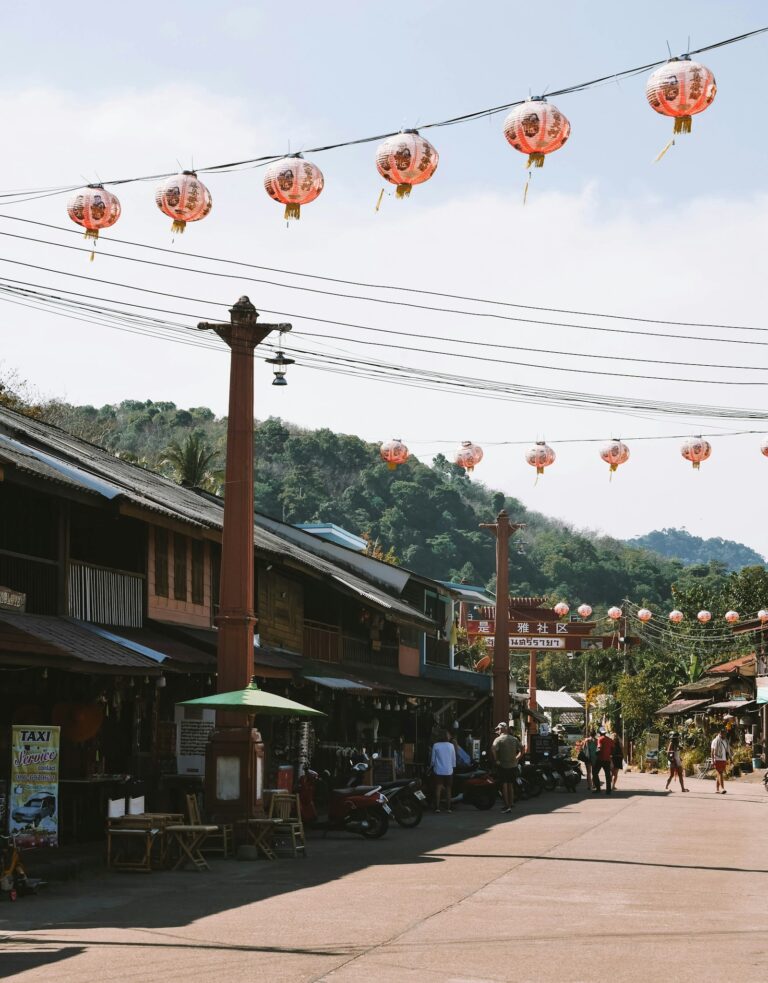
Back on shore, walk up the hillside path to Leewine Coffee, a cafe built into a traditional Yunnan house where red lanterns hang from the eaves and the upper terrace delivers a full view of the village and the lake below.
Photo not yet uploaded
Afternoon
Chong Kham–Chong Klang Temples — Shan Buddhist Heritage
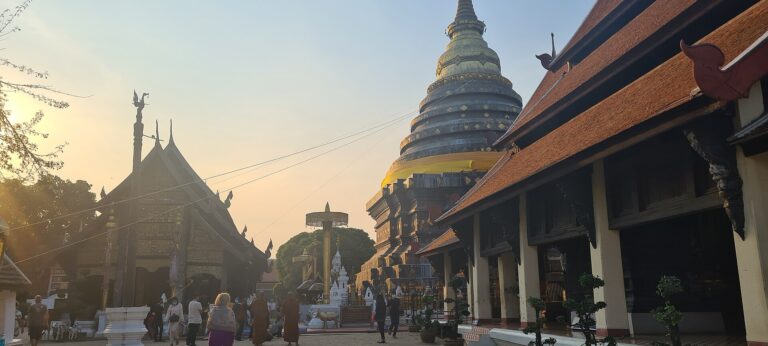
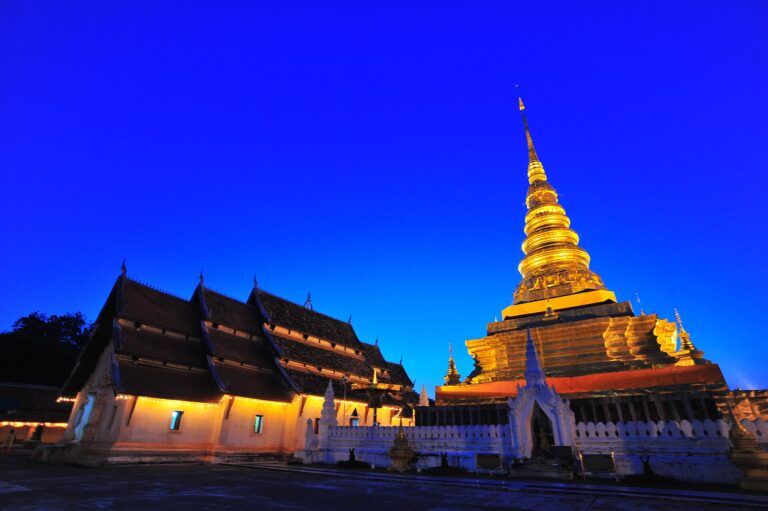
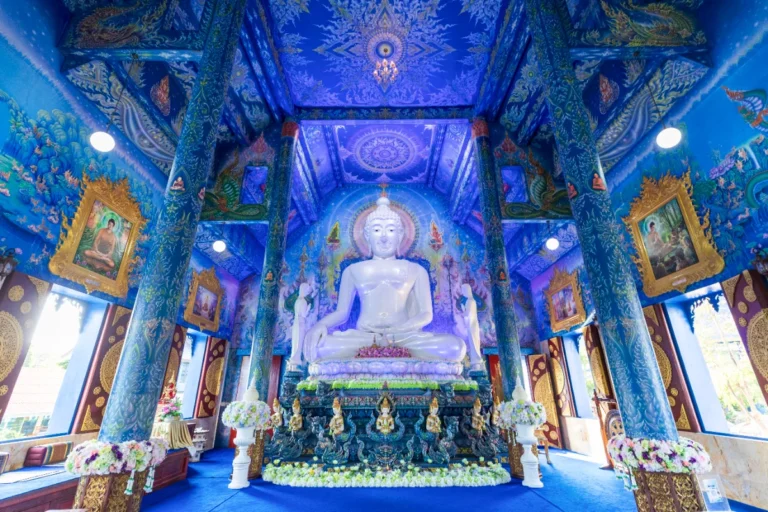
The pair of lakeside temples at Chong Kham pond is where the city’s visual identity begins and ends. The tiered rooflines are unmistakably Burmese-Shan in style. Wat Chong Klang holds over two hundred hand-carved teak figures brought from Burma in the nineteenth century.
Insider tip: Light tip: the hour between 17:00 and 18:00 gives the best reflection photography and the fewest visitors.
Photo not yet uploaded
Early evening
i.b. Coffee Matcha Bar — Renovated Wooden House
A short walk from the temples, i.b. coffee matcha bar occupies a restored wooden shophouse. There are no neon signs, no filter-coffee menus printed on butcher paper, just good matcha, good coffee, and the kind of quiet that old wood seems to hold.
Photo not yet uploaded
Evening
Saeng Poi Cottage — Check-in
Tonight’s accommodation sits among paddy fields on the outskirts of town, with mountains on every horizon. The walking street along the lake is a ten-minute tuk-tuk ride for dinner and browsing the night market.
Breakfast
Lunch
Dinner
Hotel
Saeng Poi Cottage, Mae Hong Son — boutique lodge among rice paddies, private soaking tub, mountain views
Doi Kong Mu viewpoint · Su Tong Pae bamboo bridge · Pai Canyon · departure
1Doi Kong Mu Temple — Panoramic Guardian of Mae Hong Son2Su Tong Pae Bridge — The Bridge to Fulfillment3Pai Canyon — Walk the Edge of the Earth4Farewell Mae Hong Son
Photo not yet uploaded
Early morning
Doi Kong Mu Temple — Panoramic Guardian of Mae Hong Son
The staircase to Doi Kong Mu is steep enough to make you pause, and the view at the top explains why the townspeople have climbed it for centuries. Two Shan-style chedis in white and gold mark the summit of the hill that anchors the western side of town, and from their base the entire valley unfolds in every direction.
Insider tip: Footwear note: the temple steps are uneven stone; closed-toe shoes with grip are the right call. Dress modestly — Doi Kong Mu is an active place of worship, not a viewpoint.
Photo not yet uploaded
Morning
Su Tong Pae Bridge — The Bridge to Fulfillment
A 500-metre bamboo bridge that crosses the paddy fields to a small monastery in the middle of nowhere, rebuilt each year by the local community using freshly cut bamboo — no wages, no contractor, just collective faith and shared effort.
Photo not yet uploaded
Midday (optional)
Pai Canyon — Walk the Edge of the Earth
En route toward the airport, Pai Canyon is a detour worth the stop. Millennia of erosion have carved the red laterite into a series of narrow fins and bluffs above a broad valley. The views are genuinely vast.
Photo not yet uploaded
Afternoon
Farewell Mae Hong Son
From Pai Canyon, your driver takes you to Mae Hong Son Airport for the 40-minute hop back to Chiang Mai, or onward to Bangkok. All transfer logistics are handled by our team.
Pricing
from $990 / person
Essential
$990
per person
Comfort
$1,280
per person
Boutique
$1,830
per person
What's Included
Included
2 nights’ accommodation as described
Licensed English-speaking guide throughout
Private air-conditioned car and driver
Daily breakfast at each property
All entrance fees and listed activities
Dawn boat ride on Ban Rak Thai lake
Bottled water and snacks in the vehicle
Travel insurance (basic)
Airport transfers within Mae Hong Son
Not Included
Flights to/from Mae Hong Son or Chiang Mai
Lunch and dinner (unless noted)
Alcohol and personal beverages
Personal shopping
Gratuities for guide and driver (at your discretion)
Frequently Asked Questions
How do I get to Mae Hong Son?
The fastest option is the Kan Air prop-plane from Chiang Mai — 40 minutes, scenic. The alternative is a private car along Route 1095 via Pai: roughly five to six hours and 1,864 mountain bends. We arrange whichever you prefer.
When is the best time for this trip?
October to February covers the full cool-and-misty window. Mist is thickest in December and January. March brings agricultural smoke; April to September is rainy season.
How physically demanding is the trip?
This is a gentle itinerary. The most demanding section is the stone staircase at Doi Kong Mu. Su Tong Pae bridge is completely flat.
How far in advance should we book?
For the peak mist window, we recommend booking six to eight weeks ahead. At other times of year, two to three weeks usually gives enough lead time.