A province that rewards the curious more than the rushed: a Bronze Age civilization buried and rediscovered beneath rice paddy soil, a 500-hectare lake that turns pink each winter morning, artisan weavers using wild lotus stalks for dye, and a forest full of ancient sandstone shelters that UNESCO just added to its World Heritage list. Udon Thani is where Isan gives up its deepest secrets.
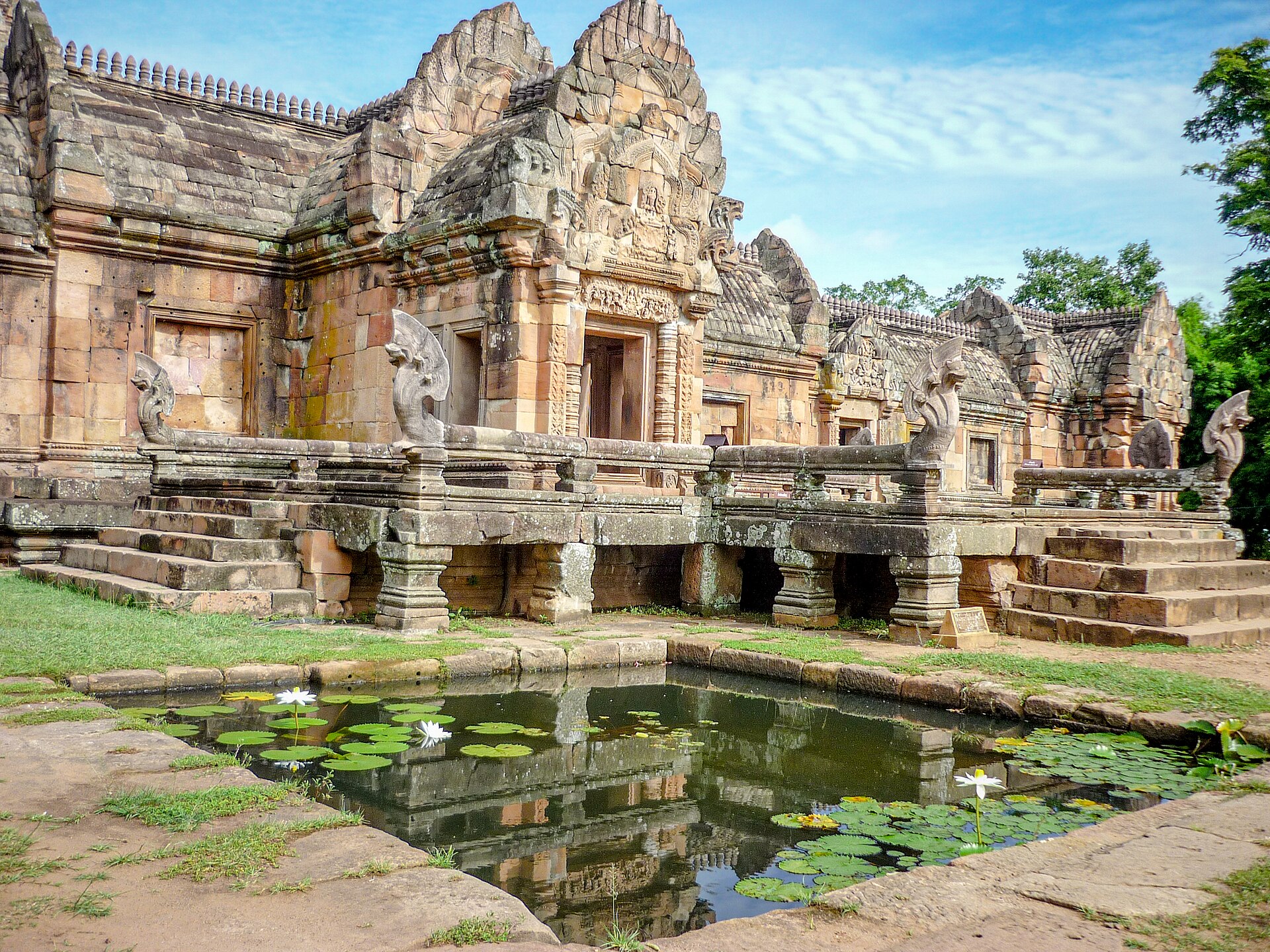
Most people who fly to Udon Thani have already decided it is a stopover. They are wrong. Udon is the only province in Thailand where you can stand in front of not one but two UNESCO World Heritage Sites within a single day’s drive — and one of those sites was only inscribed in 2024, meaning the signage is still going up and the crowds have not yet arrived. Ban Chiang, out on the plateau east of the city, rewrites the history of early civilization in Southeast Asia: the pottery buried here is 5,000 years old, the bronze-casting techniques predate many of the cultures that textbooks describe as foundational, and the quiet village around the excavated site gives the whole experience a weight that a glass-case museum never could. Phu Phra Bat, to the north, is stranger and more otherworldly still — a landscape of enormous sandstone mushroom formations that ancient people carved into shrines, surrounded by the kind of dry forest where birdsong carries further than sound should.
In between, there is the Red Lotus Sea. Locally called Talay Bua Daeng, the lake at Kumphawapi becomes one of the most photogenic natural phenomena in Thailand between December and February, when millions of pink lotus flowers bloom simultaneously across the water’s surface and the boat rides out at 06:30 into something that looks like a different planet. This itinerary builds the three days around that morning — starting the day before at Ban Chiang, spending dawn on the water, and saving Phu Phra Bat for the third morning when the light is right and the enthusiasm is still fresh. There is good food throughout, including Udon’s signature Vietnamese-Isan hybrid cuisine that tells you everything about this province’s complex border history. Three days is enough to understand why people come back.
The itinerary
World Heritage villages · ancient craft · brunch with a backstory
1Ban Chiang National Museum — 5,000-Year-Old UNESCO Site2Madame Pate 2515 — Indochina Fusion in a Vintage Shophouse3Baan Nonkok Weaving Community — Lotus-Dyed Textiles4Weladi Hotel, Udon Thani
Photo not yet uploaded
Morning
Ban Chiang National Museum — 5,000-Year-Old UNESCO Site
The road out from Udon to Ban Chiang runs flat and straight through paddy fields until the village appears with its slightly surreal street of tourist signage in four languages and its museum that genuinely deserves the attention. The National Museum here holds the finds from one of the most important Bronze Age excavations ever conducted in mainland Southeast Asia: painted pottery in rust-red spirals and lozenges, bronze and iron tools, jewellery, and animal bones that together describe a settled, technologically sophisticated community farming this plateau from at least 2100 BCE. The excavation pit at Wat Pho Si Nai, five minutes’ walk away, shows human skeletons still in situ beneath centuries of accumulated earth — the context given by the burial positions tells as much as the objects themselves. Allow ninety minutes and slow down for the pottery cases; the geometric patterns feel surprisingly contemporary.
Insider tip: Hours and access: open Wednesday to Sunday, 09:00–16:00; closed Monday and Tuesday. Admission is 150 baht for foreigners (about $4). Arrive before 10:00 to have the excavation pit mostly to yourself — school groups tend to arrive mid-morning.
Photo not yet uploaded
Brunch
Madame Pate 2515 — Indochina Fusion in a Vintage Shophouse
Back in Udon city, Madame Pate 2515 occupies a corner shophouse that has been dressed in colonial-era props — rattan furniture, old maps, French-language posters — with enough conviction to feel like a set but enough genuine charm to work anyway. The menu plays at the intersection of Isan, Vietnamese, and French-colonial cuisine that defines Udon’s most interesting food: the pate served on toast freshly baked that morning, a slow stew thickened with local aromatics, and the kind of coffee that arrives already perfect. It opens at 06:30 and starts to quieten after 11:00, which makes it ideal for a late breakfast after the museum. The address is 304/24 Prachak Road — look for the vintage bicycle propped against the facade.
Photo not yet uploaded
Afternoon
Baan Nonkok Weaving Community — Lotus-Dyed Textiles
Sixty kilometres from Ban Chiang, the village of Baan Nonkok has quietly become one of the most interesting craft centres in the northeast. The weavers here have been working with handlooms for generations, but what distinguishes them is a dyeing technique that uses the red lotus — the same species that blooms on Kumphawapi lake — to produce colours that range from a warm blush through to a deep rose-burgundy depending on the mordant. You can watch the whole process from raw cotton to finished fabric and, if you arrange it in advance (your guide handles this), participate in a natural-dye workshop using fresh lotus petals. The fabrics themselves — scarves, table runners, small pieces of wrapping cloth — are made at a pace that precludes mass production, which means they are genuinely worth buying as the price reflects neither the skill nor the time involved.
Photo not yet uploaded
Evening — Check-in
Weladi Hotel, Udon Thani
Centrally located on Adulyadej Road, Weladi is the benchmark of premium accommodation in Udon — contemporary Isan design executed with restraint: warm timber panelling, clean geometry, and a lobby that smells of fresh jasmine rather than air-freshener. After two site visits and a workshop, it is the right place to stop. The rooftop pool is a good option before dinner; the hotel concierge can arrange a tuk-tuk to the walking street, which is a ten-minute ride.
Breakfast
Lunch
Dinner
Hotel
Weladi Hotel, Udon Thani — premium city hotel, contemporary Isan design, central location, rooftop pool
Red Lotus Sea at dawn · tree-to-bar chocolate · the walking street at dusk
1Kings Ocha — Legendary Breakfast Before the Boat2Red Lotus Sea (Talay Bua Daeng) — Lotus Boat on Kumphawapi Lake3Tree2bar Specialty — From Cacao Farm to Tasting Bar4Udon Thani Walking Street — Friday & Saturday Night Market
Photo not yet uploaded
Very early morning — 04:30 departure
Kings Ocha — Legendary Breakfast Before the Boat
Udon people will tell you that Kings Ocha at the corner of Si Sattha Road opens at 04:00 for a reason — the lotus boat schedule waits for no one. The egg pan (khai krata) arrives still sizzling in a miniature cast-iron skillet, the pateh bread is Udon’s version of the French baguette adapted through a century of Vietnamese-French-Isan crossover, and the iced coffee is thick enough to hold a spoon upright. The restaurant has been feeding early risers and market traders since before most of the city existed in its current form. Do not arrive expecting a printed menu with English translations — point at what the table next to you is eating, and you will be fine. Be out by 05:30 to make the drive to Kumphawapi.
Photo not yet uploaded
Sunrise
Red Lotus Sea (Talay Bua Daeng) — Lotus Boat on Kumphawapi Lake
Kumphawapi Lake is roughly 50 kilometres south of Udon city — 500 hectares of shallow water that fills each winter with Nelumbo nucifera, the pink lotus that blooms from December through February in densities that make the surface of the lake look upholstered. Your guide arranges the boat at the landing at Ban Diam, and by 06:30 you are out on the water in the growing light, surrounded by flowers at eye level. The experience is difficult to describe without sounding like a brochure: what is genuine is the stillness, the fact that the boat moves almost without sound, and the quality of the light at that hour falling sideways across thousands of open blooms. Lisa from Blackpink posted her visit here in 2023 and the lake received more foreign visitors that season than in the previous five years combined — arrive early and on a weekday to keep ahead of that effect.
Insider tip: Bloom season: December to February, peak in January. The flowers open fully between 06:00 and 10:00 and begin to close in the afternoon heat — there is no afternoon substitute for arriving at dawn. Bring a light jacket; lake air in December is cold before the sun rises.
Photo not yet uploaded
Late morning
Tree2bar Specialty — From Cacao Farm to Tasting Bar
Udon Thani grows cacao, and Tree2bar is the most serious attempt to do something interesting with that fact. The shop and workshop at 375 Moo 7, Sam Phrao, operates as a small-batch bean-to-bar producer: cacao sourced from a farm about twenty minutes away, fermented and roasted on-site, pressed and tempered by hand into bars and drinking chocolate that carry the particular fruity bitterness of Isan-grown cacao rather than the generic sweetness of most supermarket chocolate. The workshop — which your guide can book in advance — involves tempering chocolate and moulding it into your own bar, an activity that sounds touristy and turns out to be genuinely absorbing. Opens Wednesday to Sunday, 09:00–15:00.
Photo not yet uploaded
Evening
Udon Thani Walking Street — Friday & Saturday Night Market
The walking street in front of the provincial hall (open Friday and Saturday evenings, 17:00–22:00) is where Udon shows you its self-image: Isan food stalls doing brisk business alongside young designers selling hand-printed cotton pieces and ceramic work that borrows from the Ban Chiang visual vocabulary without being obvious about it. The crowd is predominantly local — families, students, couples — which keeps the atmosphere more genuine than similar markets in tourist-heavy cities. Eat a full dinner here: grilled chicken with sticky rice, larb with the particular sharpness of toasted rice powder, and a cold beer in a plastic cup while standing at a fold-out table is the correct way to spend a Friday night in Udon.
Phu Phra Bat — UNESCO 2024 · farewell lunch · departure
1Phu Phra Bat Historical Park — Thailand's Newest UNESCO World Heritage Site2VT Haenm Neung — Vietnamese-Isan, Done Right3Departure from Udon Thani
Photo not yet uploaded
Morning
Phu Phra Bat Historical Park — Thailand's Newest UNESCO World Heritage Site
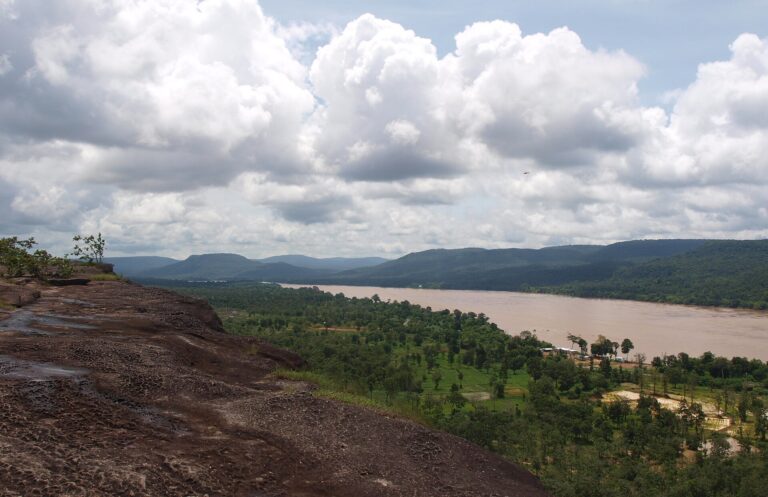
In July 2024, UNESCO added Phu Phra Bat to the World Heritage List — Thailand’s fifth inscription and Udon Thani’s second. The designation was a long time coming. The park sits on a sandstone plateau about 67 kilometres north of the city, and the landscape it protects is unlike anything else in Thailand: hundreds of naturally formed sandstone formations — some like mushrooms balanced on narrow stems, some like arches, some like giant stacked blocks — that people have been using as sacred sites for at least 2,500 years. What makes Phu Phra Bat extraordinary is the layering: the same rock shelters contain prehistoric paintings, Buddhist boundary stones (bai sema) from the Dvaravati period, and later Khmer inscriptions, each generation adding its own reading of a place that was already ancient when they arrived. Walk the main circuit slowly — about 4 kilometres with good path markings — and let your guide identify the key formations, which all have their own names: Hor Nang Usa, Tham Khon, Khok Mueang. The forest around them is dry deciduous with excellent birdwatching if you pause and listen.
Insider tip: Visitor numbers: the UNESCO inscription is recent enough that this is still an uncrowded site by Thai standards. Early morning is quieter — arrive at 08:30 when the park opens and you may have the first hour almost to yourself. Wear closed-toe shoes and bring water; the path is uneven in places and the shade is intermittent in the dry season.
Photo not yet uploaded
Farewell lunch
VT Haenm Neung — Vietnamese-Isan, Done Right
Udon Thani has one of the most concentrated Vietnamese communities in Thailand, descended from families who crossed the Mekong during the First Indochina War in the 1940s and 1950s and never went back. That community’s food — particularly haenm neung, the Vietnamese-style fresh spring roll assembled at the table with grilled pork sausage, fresh herbs, rice paper, and a sauce built around fermented shrimp paste — is the definitive taste of Udon. VT Haenm Neung on Phosri Road (behind Wat Pho Thi Somphorn) has been doing this for decades and makes no concession to simplified tourist versions. You assemble each roll yourself: a sheet of softened rice paper, a piece of sausage, a tangle of fresh herbs and vermicelli, a fold, a dip. It is the right way to end a trip that has been about understanding how many cultures have moved through and stayed in this corner of Thailand.
Photo not yet uploaded
Afternoon
Departure from Udon Thani
Udon Thani International Airport (IATA: UTH) is about fifteen minutes from the city centre and offers direct flights to Bangkok Don Mueang and Suvarnabhumi, plus connections to Chiang Mai. Your driver handles all transfers. If you are continuing overland, the road north toward Nong Khai and the Friendship Bridge to Laos is an easy 55-kilometre drive along a four-lane highway — a natural extension of any Isan journey. All logistics from the moment you arrived to the moment you leave are handled by our team.
Pricing
from $990 / person
Essential
$990
per person
Comfort
$1,280
per person
Boutique
$1,830
per person
What's Included
Included
2 nights' accommodation as described
Licensed English-speaking guide throughout
Private air-conditioned car and driver
Daily breakfast at each property
All entrance fees and listed activities
Lotus boat ride on Kumphawapi lake
Baan Nonkok weaving community visit
Bottled water and snacks in the vehicle
Travel insurance (basic)
Airport transfers within Udon Thani
Not Included
Flights to/from Udon Thani
Lunch and dinner (unless noted)
Alcohol and personal beverages
Tree2bar chocolate workshop fee (if booked)
Personal shopping
Gratuities for guide and driver (at your discretion)
Make It Yours
This is a starting point — make it yours. Every We Go Round trip is private and built to your exact pace. Popular ways to adapt this Udon Thani itinerary: Add a day trip north to Nong Khai and the Mekong riverfront — one of the most atmospheric small cities in Thailand Extend the weaving workshop into a half-day textile deep-dive including a private lunch with the artisan family Combine with our Khon Kaen or Nakhon Phanom itinerary for a full Isan loop of 7–10 days Book the lotus boat for sunset instead of sunrise (different light, fewer visitors — a genuinely different experience) Add a village homestay near Ban Chiang for an overnight stay in the archaeological zone itself Get my proposal — free, within 48h WhatsApp us
Frequently Asked Questions
When is the best time to visit Udon Thani?
November to February is the prime window for this itinerary. The Red Lotus Sea blooms from late November and reaches its densest flowering in January, when millions of flowers cover the lake surface simultaneously and the cool morning air means you can stay on the water comfortably for an hour or more. Ban Chiang and Phu Phra Bat are accessible year-round, though the cool dry season makes walking outdoors significantly more pleasant than the hot months of March to May. We generally avoid March and April due to haze from agricultural burning across the Khorat Plateau.
How do I get to Udon Thani?
Udon Thani International Airport (UTH) has multiple daily direct flights from Bangkok (about 1 hour 10 minutes) with Thai AirAsia, Nok Air, Lion Air, and THAI. Flights from Chiang Mai are also available. Alternatively, the overnight sleeper train from Bangkok Hua Lamphong or Bang Sue Grand Station is comfortable and arrives in the early morning — a pleasant option if you enjoy the ritual of train travel. We arrange all airport or station pickups and handle every transfer throughout the trip.
Is the lotus boat ride physically demanding?
Not at all. The boat at Kumphawapi is a wide, stable wooden vessel — you board from a concrete pier and sit for the entire experience. The main physical requirement is a single step down into the boat, which our guide assists with. The scheduling demand is the real commitment: you need to leave the hotel by 04:30 to reach the pier, eat breakfast at Kings Ocha, and be on the water by 06:30. The reward for that early start is a lake that still has mist on the surface and flowers that have just opened.
How far in advance should we book?
For the lotus season (December to February) we recommend booking 6–8 weeks ahead — accommodation in Udon fills during the high season, particularly around the New Year period. Phu Phra Bat recently received its UNESCO inscription and interest is growing quickly, though the site itself does not yet restrict visitor numbers. Outside the lotus season, two to three weeks is typically sufficient. We take a 30% deposit to hold dates, with the balance due 30 days before departure.