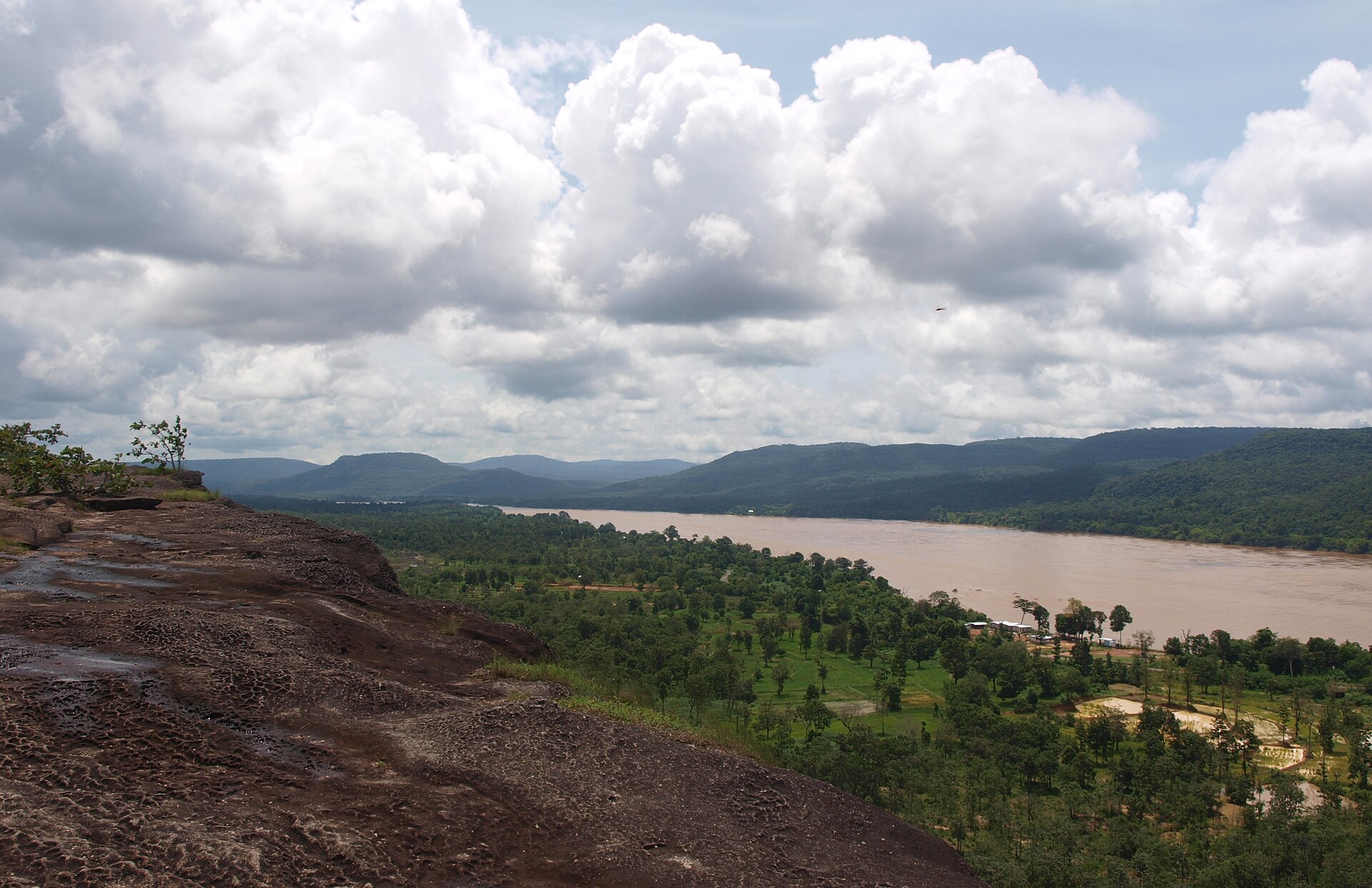
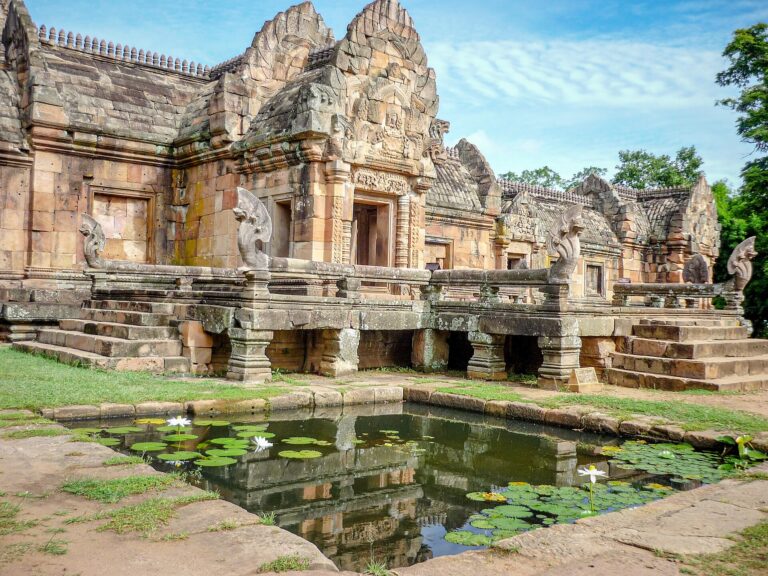
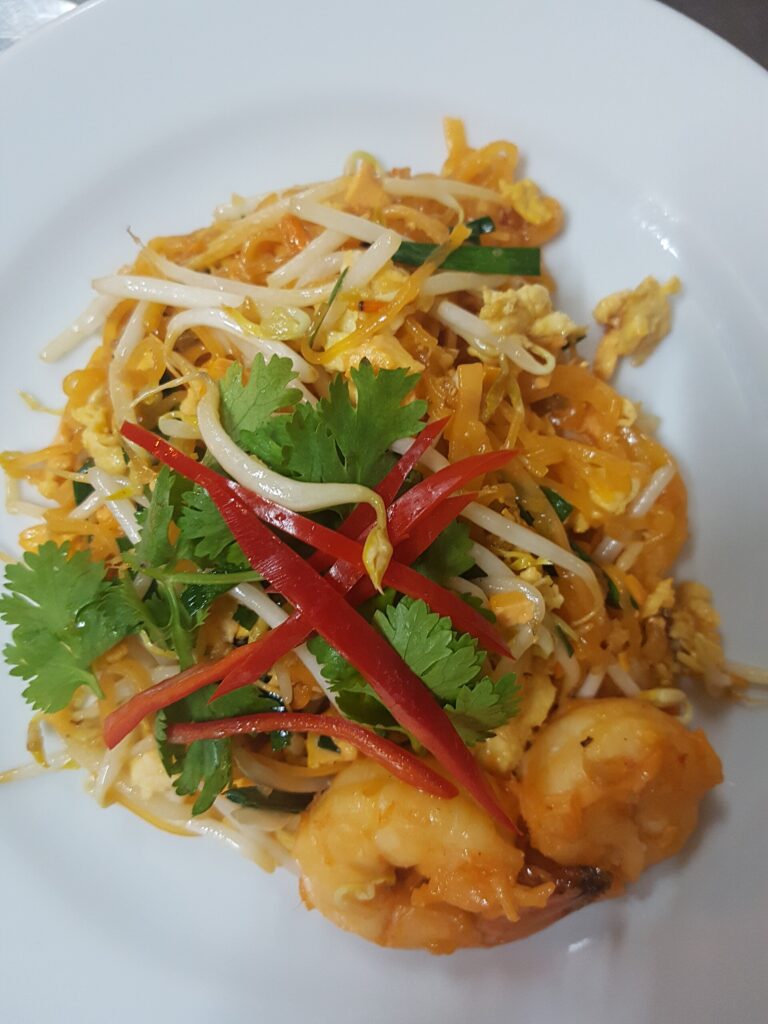
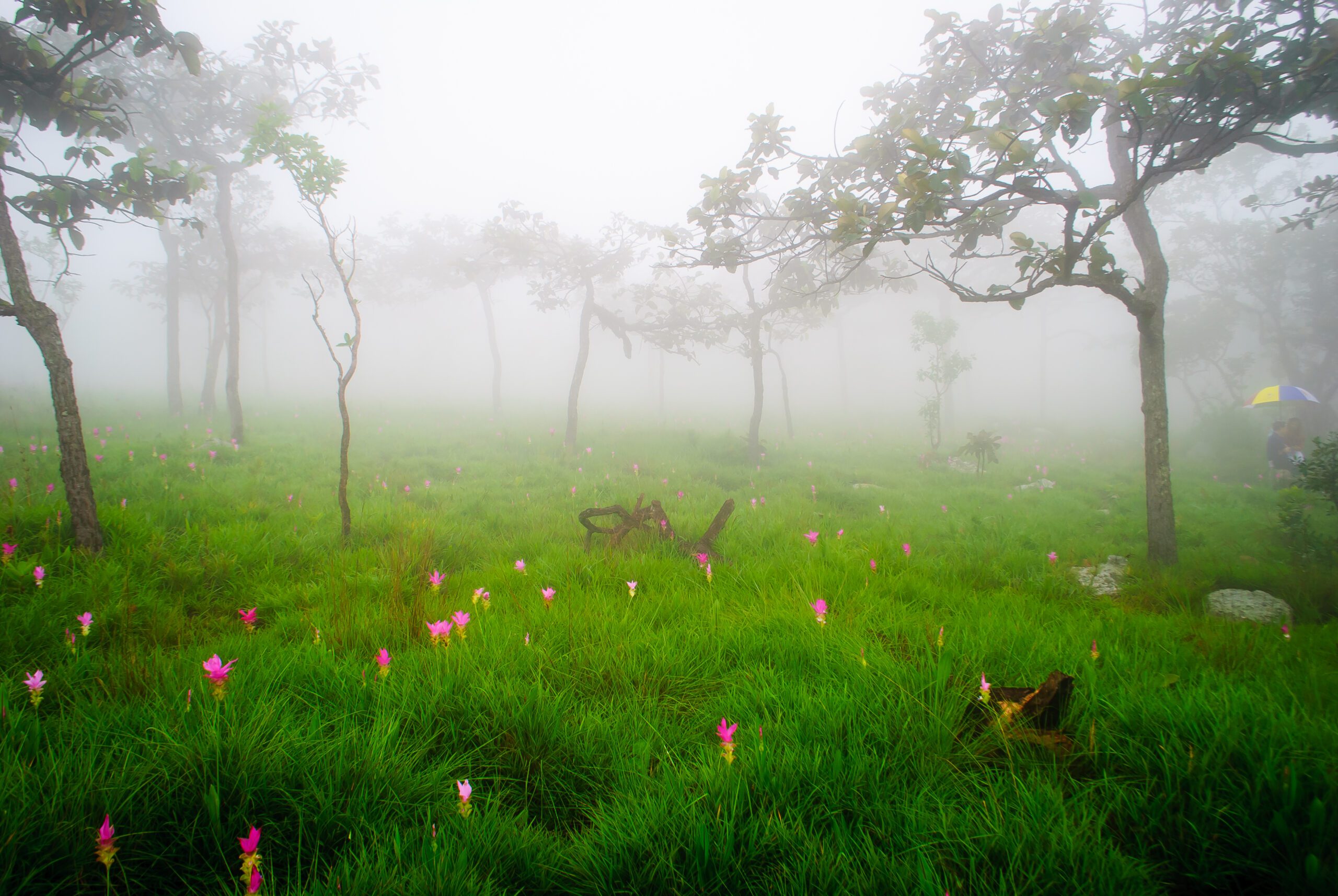
The Mekong canyon at sunrise, a temple that glows in the dark, a morning fog drifting over Thailand's oldest cliff paintings, and a provincial food scene that rivals anywhere in the country. Twenty million people live in Isan. Almost no tourists come here. That is the point.
Isan is Thailand’s last undiscovered region. It is also, by population, the country’s largest — a vast plateau bordering Laos and Cambodia, with its own dialect, its own silk traditions, its own ferociously good cuisine, and almost no English-language tourism infrastructure whatsoever. That last fact is not a warning; it is the reason to go. Here you are a guest in someone’s home province, not a customer in a machine built for visitors.
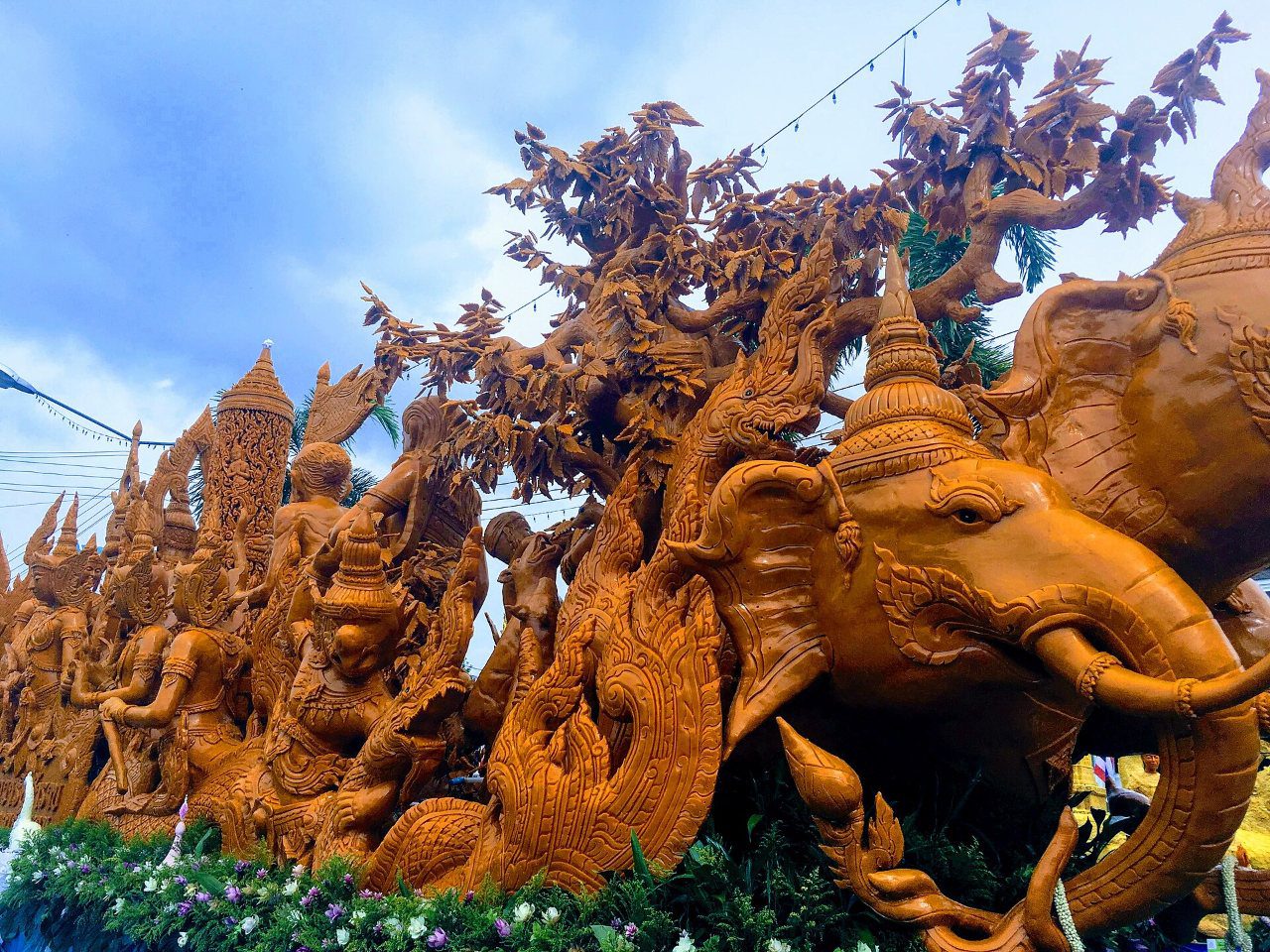
Ubon Ratchathani sits at the sharpest corner of that frontier: the Emerald Triangle where Thailand, Laos and Cambodia converge above the Mekong. Ancient Khmer temples stand in the rice fields largely unvisited. Every July, local craftsmen spend months carving cathedral-sized sculptures from beeswax for a candle festival that almost no foreigners have ever seen. At Pha Taem, 3,000-year-old cliff paintings look out over the same bend of river that Bronze Age people saw — and the morning fog still rises the same way. This trip goes slowly, stays curious, and eats extremely well.
The itinerary
City flavours, a guardian stupa, and sunset on the Mekong
1Indochine Restaurant2Wat Phra That Nong Bua3The Bull and Flower Cafe4Him's River Cafe and Restaurant
Photo not yet uploaded
Morning
Indochine Restaurant
The itinerary begins with breakfast — and not just any breakfast. Ubon has a deep Vietnamese-heritage food culture stemming from generations of cross-border movement, and Indochine is the city’s most storied expression of it. Nem nuong (grilled pork spring rolls) arrive with a forest of fresh herbs and a dipping sauce that people have been quietly requesting the recipe for since the 1980s. Order one plate and immediately order another.
Photo not yet uploaded
Mid-morning
Wat Phra That Nong Bua
Ubon’s guardian stupa is modelled on the great Mahabodhi Temple at Bodh Gaya in India — a surprising choice that speaks to the ambition and deep faith of the Isan people who built it. The outer gates are flanked by serpentine nagas of extraordinary craft. Inside, the chedi enshrines relics and is ringed by Buddha images and murals illustrating the life of the Buddha in a style you won’t see anywhere else in Thailand. This is a place of active worship; come quietly and stay as long as you like.
Photo not yet uploaded
Afternoon
The Bull and Flower Cafe
A pause in a whitewashed garden cafe on the edge of town — the kind of place that appears nowhere in any guidebook and gets discovered by word of mouth. The aesthetic is English cottage by way of Isan: fresh flowers everywhere, gentle light, cold-brew coffee made from beans roasted down the road. It is a useful place to remember that not everything in this province announces itself.
Photo not yet uploaded
Evening
Him's River Cafe and Restaurant
Your first proper look at the Mekong. Him’s River sits on a promontory above the water where you can watch the great river slide past between forested banks — on the far side, that is Laos. The menu runs from grilled river fish and punchy Isan salads through to proper coffee; the setting does most of the work. Come before the sun drops behind the hills and stay until dark.
Breakfast
Lunch
Dinner
Hotel
Rapeephan Ville Hotel — a boutique property in the city centre, decorated with warmth and care; the kind of place run by people who genuinely want you to sleep well.
Khong Chiam canyon, the Memory Cafe panorama, and the glowing temple
The road out to Khong Chiam district follows the Mun River east toward the Mekong, through rice paddies and small towns that have no reason to dress up for visitors. Saeng Chan — locally called the “falling-into-a-hole” waterfall — is a geological curiosity: the stream drops through a natural hole in the sandstone and emerges as a column of white light in a shadowed chamber below. It photographs strangely, beautifully, and nothing quite prepares you for it. The forest around it is cool and quiet in the morning hours.
Photo not yet uploaded
Midday
Memory Cafe, Khong Chiam
Perched on a hillside above the confluence of the Mun and Mekong rivers — the famous “two-coloured river” where the brown Mun meets the green-grey Mekong and the waters run side by side without fully mixing — Memory Cafe has one of the most panoramic views in Isan. The building is open-sided, the coffee is genuine, and the kitchen produces food worth lingering over. Take a long table on the terrace and watch river traffic pass far below.
Photo not yet uploaded
Afternoon
Wat Sirindhorn Wararam Phu Prao — the Glowing Temple
On a ridge above the Mekong, this temple has earned the name “Wat Rueang Saeng” — the Glowing Temple — for a reason nobody fully explains in advance: after dark, the Kalpaphruek trees planted around the ordination hall begin to phosphoresce, emitting a soft, cold green light from their bark and roots. The effect is somewhere between miracle and hallucination. The temple also commands a panoramic view of the Mekong and the Lao hills; our guide knows when the bioluminescence is most visible (roughly 6 to 7:30pm) and will time the visit accordingly.
Breakfast
Lunch
Dinner
Hotel
Tor Saeng Heritage Khong Chiam — a premium riverside resort that weaves contemporary design with the textile traditions of the region. Wake to mist over the Mekong. The antithesis of a business hotel.
Pha Taem cliff paintings, and Sam Phan Bok — Thailand's Grand Canyon
1Pha Taem National Park2Sam Phan Bok — the Three Thousand Bowls3Return to Ubon — departure or extension
Photo not yet uploaded
Early morning
Pha Taem National Park
The alarm is worth it. Pha Taem is a long sandstone escarpment dropping sheer to the Mekong, and the most easterly point in Thailand — meaning the first place in the country where the sun rises each year. The cliff face carries ochre paintings made by Bronze Age people some 3,000 years ago: fish, turtles, human figures, and geometric patterns rendered at a scale that suggests ceremony rather than casual mark-making. No other country’s border is quite like this: standing here, looking across the brown water at Laos, with ancient paintings at your back and the morning fog still lifting off the river, is among the most quietly affecting things you can do in Thailand.
Photo not yet uploaded
Morning
Sam Phan Bok — the Three Thousand Bowls
The Mekong recedes every dry season to reveal an extraordinary moonscape: more than three thousand natural rock pools and hollows carved by the current over millennia into the riverbed sandstone. Each pool catches the light differently; together they create something that looks closer to another planet than to a riverbank in Isan. This is also, improbably, where the K-pop star Lisa filmed a sequence that went viral — which is the least interesting thing about it, but explains why you may recognise the photographs. Visit in the dry season (November through May) when the pools are fully exposed.
Photo not yet uploaded
Midday onward
Return to Ubon — departure or extension
The drive back to Ubon gives time to stop at a roadside market for Isan provisions — fermented fish paste wrapped in banana leaf, sticky rice in woven bamboo, dried chillies in quantities that require explanation at customs. Your flight home is typically late afternoon; or we can continue north to extend the journey.
Pricing
from $1,020 / person
Essential
$1,020
per person
Comfort
$1,320
per person
Boutique
$1,890
per person
What's Included
Included
Private car and driver throughout
Licensed English-speaking guide, all 3 days
2 nights' accommodation as described
All entrance fees at every site
Daily breakfast + 2 featured meals
Airport transfers in Ubon Ratchathani
Not Included
International and domestic flights
Travel insurance (required)
Meals not listed, personal spending
Gratuities (entirely at your discretion)
Frequently Asked Questions
How do I get to Ubon Ratchathani?
Direct flights from Bangkok (both Suvarnabhumi and Don Mueang) take about 1 hour 15 minutes. Nok Air and Thai AirAsia fly the route several times daily. We meet you at Ubon airport and handle everything from arrival. An overnight sleeper train from Bangkok is also an option for those who enjoy the rail experience — it arrives early morning and gives you a full first day.
When is the Candle Festival and can we time the trip around it?
The Ubon Candle Festival (Hae Thian Khao Phansa) falls on the first day of Buddhist Lent, typically in mid-July. Local craftsmen spend months carving enormous beeswax sculptures — some three storeys tall — which are then paraded through the city in a procession that is one of Thailand’s most spectacular events and almost entirely off the foreign tourist radar. We can build the itinerary around festival dates; book at least three months ahead as accommodation fills quickly that week.
Is Isan safe for foreign travellers?
Yes, absolutely. Isan is one of Thailand’s safest and most genuinely hospitable regions. There are essentially no tourist-facing scams because there are very few tourists — locals are simply pleased to see visitors. The border areas at Pha Taem and Sam Phan Bok are peaceful and well within Thailand; our guide is with you throughout. Normal travel common sense applies, nothing more.
What is the food like in Ubon?
Some of the best in all of Thailand. Isan cuisine is its own tradition — fiery, herb-driven, and deeply flavoured. Expect proper som tum (green papaya salad pounded to order), laab (minced-meat salads with toasted rice powder), grilled chicken marinated overnight, and freshwater fish from the Mekong. There is also a strong Vietnamese-heritage food scene in Ubon city from generations of cross-border movement — the nem nuong spring rolls at Indochine restaurant are locally famous. Eating well here requires no special knowledge: follow your guide, follow your nose.