Thailand's oldest seaside resort wears its history lightly. A wooden train station so photogenic it has been disassembled and reassembled. A shoreline that still draws royalty. And one stop north, the sugar-scented old city of Phetchaburi — almost completely overlooked, which is precisely its appeal.
Hua Hin is where the Thai royal family has gone to the sea for more than a century, and the town has absorbed that association without becoming stiff or self-important. The train station — a Victorian-era confection of turned wooden columns and terracotta roof tiles — is the natural beginning. From there the itinerary unfolds in the way a good day at the beach should: a shaded cafe in a garden, a village where artists have converted an old coastal community into something genuinely worth an afternoon, a sunset drink at the water’s edge, and a night market so long-established that the vendors have their own quiet pride in what they grill. This is not a schedule that demands anything from you.
The second day earns its place by moving. After a morning on Hua Hin beach, a short train north to Phetchaburi delivers everything a traveller who loves the off-road version of Thailand is looking for: a museum curated by the granddaughter of a provincial governor, a riverside market that still trades in handmade ceramics and preserved fruit, and Uncle Tan’s palm orchard — three generations of the same family tapping sugar palms and pouring the fresh juice cold over ice, in a grove that smells exactly the way you hope it will. You ride the train home that evening with good stories and unhurried feet.
The itinerary
Hua Hin — Sea, Art & Seaside Tables
1Hua Hin Railway Station2Tree House Cafe Hua Hin — Lunch in the Garden3Hua Hin Artist Village (Baan Sillapin)4Drip Rim Lay Cafe — Coffee at the Water's Edge5Let's Sea Hua Hin Al Fresco Resort — Check-in
Photo not yet uploaded
Late morning
Hua Hin Railway Station
The journey begins where all the best Hua Hin journeys do — at the train station, which was built in the 1920s and remains one of the most handsome pieces of public architecture in central Thailand. The royal waiting pavilion, transferred here from the Sanam Chan Palace grounds in Nakhon Pathom, sits at the far end of Platform 1 in a riot of red-and-white gingerbread woodwork. Arriving by train from Bangkok is the right way to do it: you walk off the carriawe and the whole town is already in the right mood. Your guide and private vehicle will meet you on the platform.
Insider tip: Photo tip: the best angle is from Platform 2, looking back across the tracks at the main pavilion in mid-morning light. Avoid noon — the overhead sun flattens the colour out of the woodwork entirely.
Photo not yet uploaded
Noon
Tree House Cafe Hua Hin — Lunch in the Garden
A five-minute drive from the station, Tree House Cafe is the kind of place that rewards slow eating. The concept is Eco House — a working garden wrapped around an open-sided wooden structure where ceiling fans move the air and chickens have opinions about the tables closest to the kitchen. The menu leans on ingredients grown or sourced locally: coconut cake made with fresh-pressed milk, cold brew dripped through a hand-built ceramic setup, a breakfast plate that turns up comfortably at noon without embarrassment. The clientele is a mixture of in-the-know Bangkokians escaping the city and local artists who hold informal court on the weekend. Neither group is in any particular hurry, and neither should you be.
Photo not yet uploaded
Afternoon
Hua Hin Artist Village (Baan Sillapin)
Baan Sillapin translates simply as “Artists’ Village,” and the name is literal. A community of Thai painters, potters, and sculptors converted a cluster of traditional wooden houses into studios and gallery spaces roughly two decades ago, and the neighbourhood has grown into one of the more honest examples of an art colony in Thailand — not a tourist shopfront dressed up with an easel, but actual working artists who happen to welcome visitors. Wander between open studios where someone is always mid-canvas, browse handmade ceramics stacked in the shade of tamarind trees, and eat lunch in the open courtyard restaurant where the menu runs to fresh river prawns and homemade noodles rather than anything on a laminated picture card. The scale is exactly right — everything here takes less than two hours, and you leave with a clear sense of having seen something real.
Photo not yet uploaded
Late afternoon
Drip Rim Lay Cafe — Coffee at the Water's Edge
The name means “drip at the water’s edge,” and the setup delivers exactly that: a small wooden platform cafe positioned so close to the sea that a high tide puts salt spray on the rail. The specialty is slow-drip filter coffee — there is no espresso machine, which is either a flaw or a feature depending on your coffee philosophy — served alongside cold sodas and a short list of Thai snacks. The view is the main event: Gulf of Thailand stretching south, fishing boats at anchor, and the light shifting from white to gold as the afternoon declines. It does not stay open late, which makes it the ideal last stop before dinner.
Photo not yet uploaded
Evening
Let's Sea Hua Hin Al Fresco Resort — Check-in
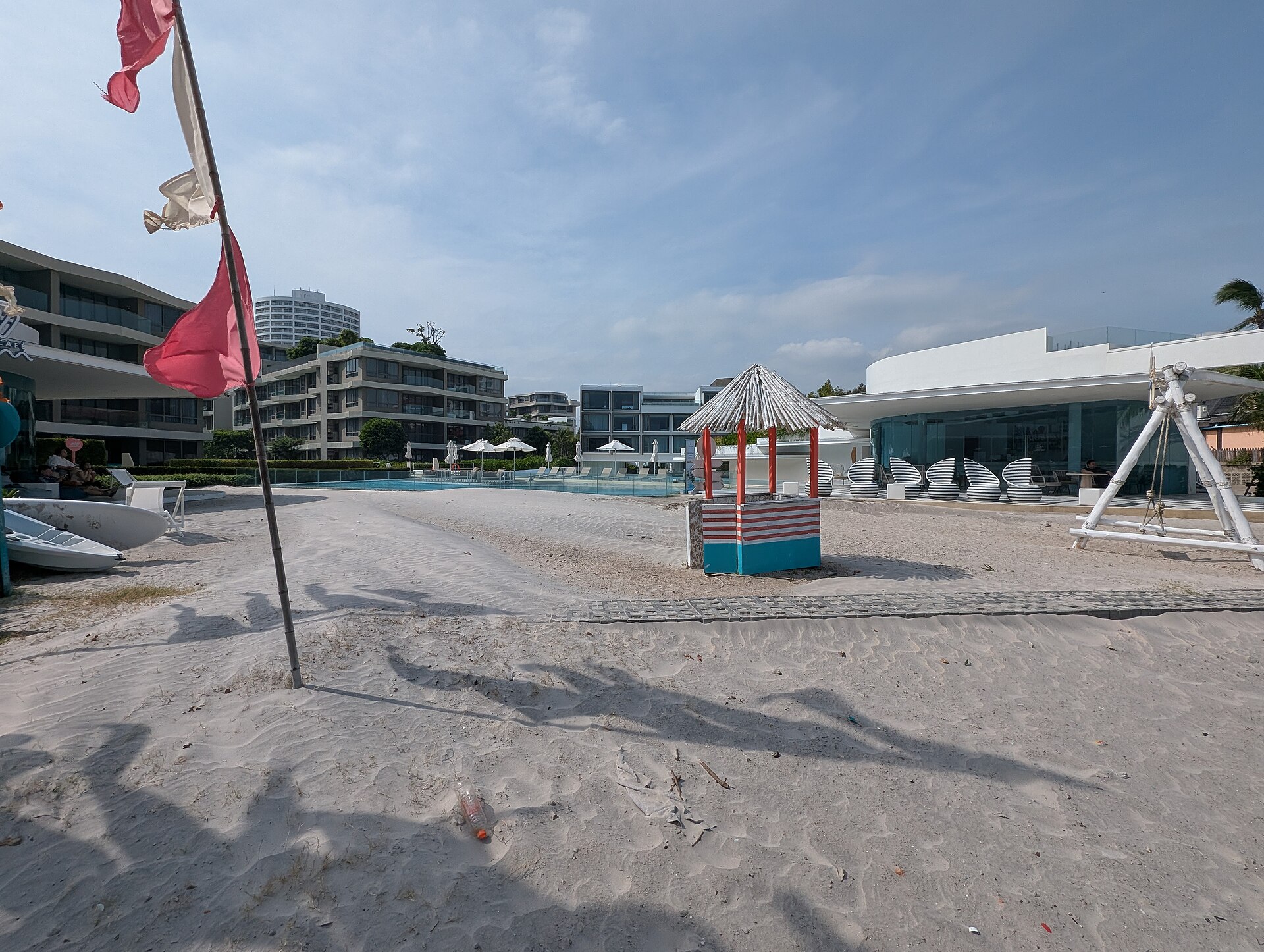
Let’s Sea is one of the better-kept secrets on this stretch of Prachuap Khiri Khan coastline: a small resort built in the style of a working fishing village, with weathered timber, galvanised roofing, and guest villas that open directly onto a private beach stretch north of the main Hua Hin hotel strip. The al fresco spirit is genuine — most dining happens outdoors, barefoot, with sand underfoot and the sound of the sea close enough to matter. After the day’s wandering, it is a place designed to make arriving feel like the reward it should be.
Breakfast
Lunch
Dinner
Hotel
Let's Sea Hua Hin Al Fresco Resort — beachfront boutique resort, private beach access, al fresco dining
Hua Hin Beach · Night Market · Train to Phetchaburi · Palm Orchard · Home
1Hua Hin Beach — Sunrise Walk2You Yen Hua Hin Balcony — Views Over the Town3Hua Hin Night Market (Dechanuchit Road)4Phetchaburi Railway Station — Into the Hinterland5Nyang Yat Museum — Phetchaburi's Hidden Archive6Phetchaburi Riverside Old Market7Uncle Tan's Palm Orchard — Fresh Palm Juice at the Source8Train Home to Bangkok
Photo not yet uploaded
Early morning
Hua Hin Beach — Sunrise Walk
Hua Hin beach stretches for roughly six kilometres from the train station southward, backed by casuarina pines and the occasional resort wall, and the first hour after dawn is when it earns its original reputation. The ponies that have been a fixture here since the 1920s are walked down to the waterline before the heat arrives; joggers and monks sharing the packed sand make for a companionable early-morning crowd that has nothing to do with tourism infrastructure. Walk south past the fishing pier, watch the long-tail boats bring in their catch to the market at the north end, and take breakfast at the hotel or at any of the small shops along the shorefront road that have been opening at six in the morning since before the resort hotels existed.
Insider tip: Local favourite: look for the folding-table vendors near the fishing pier who sell khao tom (rice porridge with shrimp) between 06:00 and 08:30 — a bowl costs about 50 baht and is one of the best breakfasts money does not quite buy.
Photo not yet uploaded
Mid-morning
You Yen Hua Hin Balcony — Views Over the Town
You Yen is a hilltop cafe-restaurant that gives you the geography of Hua Hin from above — the grid of the town, the long pale stroke of the beach, the green hills of Khao Takiab closing off the southern end of the bay. From sea level it is easy to forget how the whole thing fits together; from You Yen’s terrace it clicks into place. The kitchen does fruit juices pressed to order and a rotating menu of Thai snacks that skews toward the kind of thing a grandmother would make rather than the kind of thing a hotel kitchen would plate up for a buffet. Come for the view, stay for the unpretentious cooking, leave before the midday heat makes the exposed terrace uncomfortable.
Photo not yet uploaded
Lunchtime
Hua Hin Night Market (Dechanuchit Road)
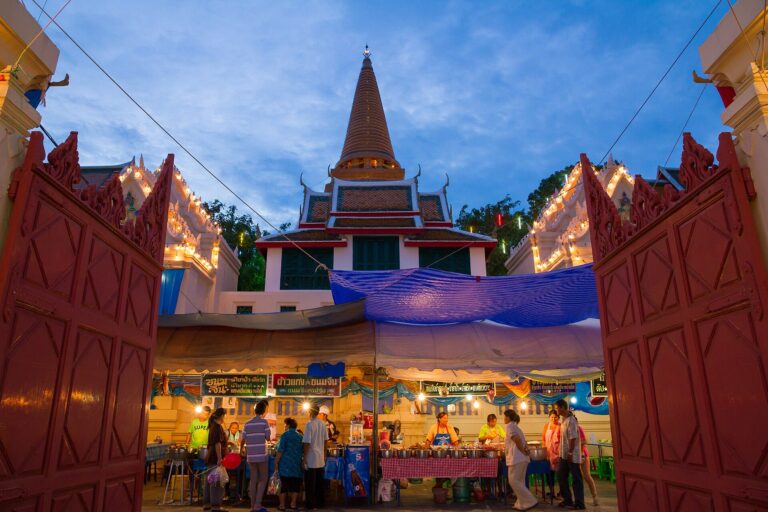
The name says night market, but the kitchen stalls along Dechanuchit Road fire up well before dark — by noon, the grills are going and the crowd is already forming around the vendors who have been here the longest. This is the real Hua Hin food scene: charcoal-grilled squid with sweet tamarind sauce, steamed mussels in a bucket with lemongrass and basil, mango slices cut over a bowl of fish-sauce caramel, iced coconut juice in a green husk hacked open with a cleaver. Order by pointing, eat standing up, and buy any of the oven-dried seahorse snacks from the dried-seafood stalls as gifts — they are lighter to carry than ceramics and more useful than a fridge magnet.
Photo not yet uploaded
Mid-afternoon
Phetchaburi Railway Station — Into the Hinterland
The train from Hua Hin to Phetchaburi takes around fifty minutes and crosses a landscape that most Gulf-coast visitors never see: flat rice paddies, palm orchards, and the occasional wat roofline appearing above treelines between stations. Phetchaburi station is a modest affair, but the city it serves is not: this was an important regional capital in the Ayutthaya period and has a concentration of temples and heritage buildings per square kilometre that rivals any provincial city in central Thailand. Your guide and vehicle meet you on the platform and the afternoon unfolds from there.
Photo not yet uploaded
Afternoon
Nyang Yat Museum — Phetchaburi's Hidden Archive
Nyang Yat is not listed in most guidebooks, which is part of the point. The museum occupies a traditional Phetchaburi townhouse whose family has lived in the building continuously for four generations, and the objects inside — lacquerware, antique ceramics, old photographs of the city’s royal ceremonies, textile fragments in colours that have not faded — have been gathered not by a curator but by a granddaughter who grew up surrounded by them. The effect is of a private home that happens to be a remarkably good museum: nothing is behind glass that does not need to be, and the stories attached to each piece are told by someone who heard them at the dinner table rather than read them in a catalogue. A visit takes about forty-five minutes and costs almost nothing. It is one of those places you mention to friends for years afterwards.
Photo not yet uploaded
Late afternoon
Phetchaburi Riverside Old Market
The old market along the Phetchaburi River is one of the last riverside trading quarters in central Thailand where the commerce is still largely local. Vendors sell preserved fruit in ceramic jars, handmade coconut-sugar candy in moulds shaped like traditional Thai sweets, fresh palm juice in reused bottles, and dried seafood trucked up from the coast the same morning. The wooden shophouses lining the riverbank date from the early twentieth century; their ground floors have been trading continuously since before most living memory. Walk slowly, buy a bag of the date-and-coconut sweetmeats that Phetchaburi is famous for, and watch the river traffic from the wooden footbridge that crosses to the temple on the far bank.
Photo not yet uploaded
Late afternoon
Uncle Tan's Palm Orchard — Fresh Palm Juice at the Source
No visit to Phetchaburi is complete without understanding what makes the city’s sugar different. Uncle Tan (or one of his family’s equivalent operations — there are several of the same generation still working their original groves) operates a small palmyra palm orchard where you can watch the tapping process — a long bamboo pole reaching thirty metres to the flower spike, a clay pot collecting the clear juice overnight — and drink the result cold over ice. The flavour is nothing like cane sugar: lighter, faintly floral, with a clean finish that explains why Phetchaburi pastry chefs insist on the local product. The orchard is a working farm, not a staged demonstration. The mud is real, the trees are old, and the juice is what it has always been.
Photo not yet uploaded
Evening
Train Home to Bangkok
From Phetchaburi station, the evening train returns to Bangkok in approximately two and a half to three hours — arriving at Hua Lamphong or Bang Sue Grand depending on the service. Your driver drops you at the station with time to spare; we arrange all departure logistics in advance. The journey home is the decompression that every good trip deserves: a window seat, the Gulf coast receding into the dark, and two days of coastline and old cities settling into memory.
Pricing
from $700 / person
Essential
$700
per person
Comfort
$900
per person
Boutique
$1,300
per person
What's Included
Included
1 night's accommodation as described
Licensed English-speaking guide throughout
Private air-conditioned vehicle and driver
Daily breakfast at the property
All entrance fees and listed activities
Bottled water and snacks in the vehicle
Travel insurance (basic)
Station transfers in Hua Hin and Phetchaburi
Not Included
Train tickets Bangkok – Hua Hin – Phetchaburi – Bangkok
Lunch and dinner (unless noted)
Alcohol and personal beverages
Personal shopping at markets
Gratuities for guide and driver (at your discretion)
Make It Yours
This is a starting point — make it yours. Every We Go Round trip is private and built to your pace. Popular ways to adapt this route: Extend to 3 nights — add Khao Sam Roi Yot wetland and cave temples south of Hua Hin Add a morning horseback ride on Hua Hin beach before the heat arrives Include Phra Nakhon Khiri (Khao Wang) hilltop palace in Phetchaburi for deeper royal history Combine with a 2-night Kanchanaburi extension for a full central Thailand loop by rail Get my proposal — free, within 48h WhatsApp us
Frequently Asked Questions
How do I get to Hua Hin from Bangkok?
The State Railway runs direct services from Hua Lamphong and Bang Sue Grand Station several times daily — journey time is roughly three to four hours and tickets cost between 100 and 350 baht depending on class. The train arrives at Hua Hin’s historic station, which is one of the most photographed buildings in the town and a far more satisfying arrival than a bus terminal. We handle all train booking and arrange a meet-on-platform service so you don’t have to navigate the station alone.
When is the best time for this trip?
November to February is the prime window. The Gulf coast of Prachuap Khiri Khan province benefits from the northeast monsoon pattern — while the Andaman side of the peninsula receives heavy rain, Hua Hin typically stays dry and breezy, with calm sea conditions and temperatures in the low thirties. March and April are warm but pleasant. The southwest monsoon from May to October brings occasional heavy showers to the Gulf coast, though rarely all-day rain — the itinerary can run year-round with minor adjustments.
What is Phetchaburi and why is it on the itinerary?
Phetchaburi is one of the most genuinely underrated cities in central Thailand. It was a regional capital in the Ayutthaya era, a royal summer retreat in the nineteenth century, and is today a living workshop for palm-sugar confectionery that the rest of Thailand considers a standard — the way Lyon is to French cuisine, or Bologna to pasta. Its old quarter has barely been touched by development; its temples are active, its market is local, and almost no western tourists go there. That is the entire reason it is on this itinerary.
How far in advance should we book?
For peak season travel in November to February, or around Thai public holidays and long weekends, three to four weeks ahead is the safe window — beachfront boutique properties at this quality level fill quickly. At quieter times one to two weeks is usually sufficient. We accept a 30% deposit to confirm dates, with the balance due 30 days before departure. Cancellation terms are generous for rescheduling; we work with you, not against you.